


Few topics surrounding sexuality are as stubbornly shrouded in myth as the question of vaginal versus clitoral orgasms . Many people grow up with the idea that there are two fundamentally different types of orgasms – and that the vaginal orgasm is the "more mature" or "correct" one. For decades, this notion has created insecurity, performance anxiety, and unrealistic expectations.
But what does current sex research really say about this? Where in the body does an orgasm originate? And why do so many people experience pleasure so differently? In this article, we take a nuanced, physically grounded, and non-judgmental look at the topic – with the aim of providing clarity and relieving pressure.
Where does an orgasm actually originate?
An orgasm doesn't originate in the vagina or clitoris alone, but rather from the interplay of nerves, blood flow, hormones, and the brain. The nervous system plays a crucial role. The clitoris is the most densely innervated pleasure organ in the female body.
The externally visible tip of the clitoris is only a small part. The majority of the clitoris lies inside the body and branches out around the vagina. This means that even pleasurable sensations perceived "vaginally" are almost always directly related to the clitoris.
The clitoral orgasm: Direct and often easier to achieve
Clitoral orgasm is achieved through direct or indirect stimulation of the clitoris . For many people with a vulva, this is the simplest and most reliable way to reach climax. The clitoris has several thousand nerve endings and is very sensitive to touch, pressure, or vibration.
A typical characteristic of clitoral stimulation is its highly targeted effect. Even small movements or gentle stimuli can trigger intense sensations. Many experience this type of orgasm as clear, intense, and easily controllable.
This is one of the reasons why masturbation works more easily for many people than sex with a partner – not because of a lack of closeness, but because the stimulation is more direct and controllable.
The so-called vaginal orgasm: A misunderstanding?
Vaginal orgasm is often described as a climax achieved solely through penetration. However, this is precisely where the misunderstanding lies. The vagina itself has relatively few nerve endings. Deep vaginal areas are primarily designed for stretching, not for intense stimulation.
When people experience orgasm during penetration or internal stimulation, this usually occurs through indirect stimulation of the internal parts of the clitoris – for example, through pressure on the anterior vaginal wall. This area is often referred to as the G-spot .
The difference, therefore, lies less in the "location" of the orgasm and more in the type of stimulation. From a physical perspective, it is almost always a clitorally mediated orgasm.

Why do these terms persist so stubbornly?
The distinction between vaginal and clitoral orgasm has historical and societal roots. For a long time, sexuality was primarily viewed from a male perspective. Penetration was considered central, with everything else secondary.
This led many people to believe they had to reach orgasm through penetration alone. Those who couldn't often felt "not normal" or "blocked." However, it's perfectly normal for the majority of people with vulvas to require additional clitoral stimulation.
Today we know that it is not the ability to experience vaginal orgasm that says something about the capacity for pleasure, but rather the knowledge about one's own body.
How do the orgasms feel different?
Many people still report different sensations – and this perception is real. An orgasm triggered by internal stimulation can feel different than one through direct clitoral stimulation.
Frequently described differences include:
Clitoral orgasms are more localized and intense.
Internal orgasms are experienced as deeper or more expansive.
Vaginal stimulation can have a more emotional effect
Combinations often feel particularly intense.
However, these differences do not arise from different types of orgasm, but from different pathways of stimulation, muscle activity, and mental involvement.
The role of the brain in pleasure and orgasm
An often underestimated factor is the brain. Pleasure arises not only from touch, but also from thoughts, fantasies, safety, and relaxation. Those who put themselves under pressure often unconsciously block arousal.
Especially when it comes to vaginal orgasm, societal pressure to meet expectations is strong. Many try to "achieve" something instead of feeling it. This can lead to the body closing down instead of letting go.
An orgasm is not an achievement, but a reaction to well-being.
Combination instead of either/or
For many people, the combination of vaginal and clitoral stimulation is particularly fulfilling. This doesn't involve choosing between two types of orgasm, but rather using different stimuli simultaneously or alternately.
This could look like this:
Penetration plus manual clitoral stimulation
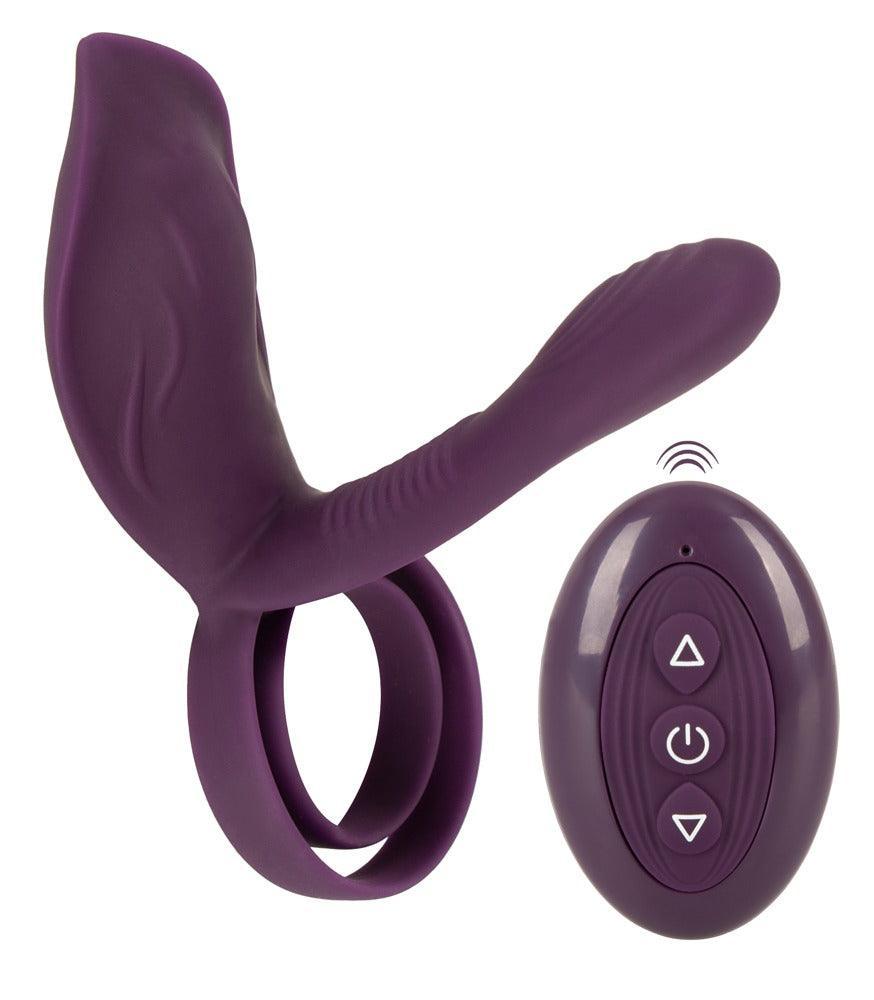
Toys with clitoral stimulators during penetration
rhythmic alternation between inside and outside
Slow increases instead of a targeted approach
This clearly demonstrates how individual sexuality is. What is perfect for one person may not be right for another.
 Female orgasm - Find your climax with these 5 tips
 Orgasm control: Techniques for a more intense experience
 The female orgasm: A guide for men
 Finding the G-spot: Anatomy, angles & toys for targeted stimulation
 Clitoral vibrators – Your guide to intense orgasms
 Pelvic floor training with love balls - Intensify your orgasm
Why so many people don't experience orgasm during sex
Studies show that a large proportion of people with vulvas rarely or never reach orgasm during penetrative sex alone. This is not an individual problem, but a structural reality .
Common reasons include:
absent or insufficient clitoral stimulation
Time pressure or focus on penetration
lack of communication
Uncertainty about one's own needs
lack of information
Knowing this can be a relief. It shows that the problem is not in the body, but often in the concept of sexuality.
Communication as the key
A fulfilling sexual experience depends heavily on the ability to express needs. Many people don't dare to say what they need – for fear of hurting their partner or disappointing their expectations.
Quite the opposite is true. Openness creates intimacy . Sharing the importance of clitoral stimulation doesn't mean something is missing – it shows how pleasure can arise.
Good sexuality is not about guesswork, but about being together.
Toys as support, not as a replacement
Sex toys are sometimes perceived as competition. In reality, toys are often a valuable addition . They allow for targeted stimuli that are difficult to create with hands or body alone.
Clitoral stimulators or vibrators, in particular, can help you get to know your own pleasure better – alone or with a partner. They don't replace intimacy, but rather expand the spectrum.
loveiu.ch deliberately offers products that focus on body awareness and enjoyment, not on performance pressure.
Self-perception changes desire
Many people only truly discover their pleasure when they explore themselves – without expectations, without an audience. Masturbation is not a substitute for sex, but a path to bodily knowledge.
People who know what feels good can communicate that more easily. And those who know their own body reacts normally often experience sexuality in a more relaxed way.
Conclusion: One orgasm, many paths – everything is normal.
The question of vaginal versus clitoral orgasm often leads us astray. What matters is not how an orgasm occurs, but that pleasure is experienced. The female body is complex, sensitive, and individual. The clitoris almost always plays a central role – even when pleasure is perceived as "vaginal."
There is no wrong way to feel, no wrong path to climax, and no standard by which to measure oneself. Sexuality can be curious , pressure-free , and self-determined .
loveiu.ch stands for exactly this understanding of pleasure: informed, open and without norms.
Loveiu is the leading Swiss online sex shop with a comprehensive guide offering tips on sex toys and a fulfilling love life. Check back occasionally and look out for great articles.
Unsere Bestseller
Diese Produkte bereiten unseren Kunden die meiste Freude!
Produkte im Sale
Sichere dir ausgewählte Produkte zum reduzierten Preis.



Bekannte Marken bei Loveiu